Un danez in Romania
Suna ca un titlu de roman sau de cantec. Nu este nimic din toate acestea. Este doar povestea lui Robin Wildt Hansen, un indragostit de tara noastra si de limba romana pe care o vorbeste foarte bine. Si mai este ceva. Este o scurta istorie despre cum Romania a schimbat viata unui om cu toate prejudecatile, temerile si obisnuintele sale.


Ce te-a determinat sa inveti limba romana?
Ma ocupam de lingvistica si m-am inscris la un curs suplimentar de limba romana la Universitatea din Lund, in Suedia. Nu ma gandeam niciodata ca am sa reusesc sa o fac atat de… complet. A fost un curs fantastic, tinut de o profesoara extrem de carismatica, Coralia Ditvall, care si-a pus de-a dreptul tot sufletul in prmovarea Romaniei si a limbii romane in tarile nordice.
Dupa cateva luni de curs, un coleg mi-a spus ca doamna Ditvall a primit o bursa la o scoala de vara in Timisoara. Din pacate, nu putea merge si mi-a propus mie sa particip. Nu m-am gandit niciodata ca as putea ajunge in Romania. Nu stiam nimic despre aceasta tara, dar am luat propunerea atat de neasteptata, ca pe un semn al destinului. Nu a fost doar atat. S-a dovedit a fi o mare aventura.
Cum a decurs primul tau contact cu tara noastra?
Pot spune ca prima mea calatorie ilustreaza perfect perceptia obisnuita a unui strain asupra Romaniei.
Era in 1999. Am aterizat pe aeroportul din Budapesta si apoi am luat un tren spre Timisoara, cu schimbare la Arad.
La granita, a intrat in compartiment un vames ca sa ne verifice pasapoartele. Cand a vazut ca al meu este danez, m-a privit mirat si apoi s-a uitat in directia in care trenul urma sa plece. “Romania?!” a spus el neincrezator. Eu am aprobat din cap, el a dat din umeri ca si cum mi-ar fi spus ca sunt nebun, iar el nu ma poate ajuta. Dupa plecarea lui, am inceput sa ma ingrijorez. “Ce era tara asta ciudata in care urma sa intru?!” Auzisem doar o singura data ceva despre Romania, de la un roman din Copenhaga. Imi sugera, cumva, ca este un loc nebun si periculos. Si apoi, cum ma puteam descurca, nestiind decat trei cuvinte: “Da”, “Nu” si “Mulțumesc”.
Dupa ce m-am linistit, a intrat o pereche de romani care purtau ceva foarte asemanator unor uniforme militare. S-au uitat la mine si au zambit. Atat.
“Vrei sa-mi vedeti pasaportul?” am intrebat, in timp ce il scoteam. Au dat din cap ca nu.
“Vreti sa schimbati bani?” a intrebat unul dintre ei.
In compartiment au inceput sa intre din ce in ce mai multi astfel de politisti de frontiera, pana s-a umplut. Unii stateau chiar afara, pe culoar. Unul dintre ei mi-a spus ca s-ar putea sa pierd legatura de Timisoara si ca va trebuie sa astept in Arad pana dimineata.
“Este periculos?” am intrebat.
“Nu,” a raspuns el. “Dar este mai bine sa luati un taxi de la o companie pe care o stim.”
Ca sa nu mai lungesc povestea, am platit pe cursa aproape toti banii pe care ii aveam. Si nu erau putini deloc. Dar mi i-au luat cu mult farmec si nicio clipa nu m-am simtit amenintat. Intr-un fel, a fost greseama mea: am fost victima propriilor prejudecati despre Romania.
Au disparut aceste prejudecati?
Foarte repede.
Cand am sosit la Universitatea din Timisoara, am fost uimit de ospitalitatea si amabilitatea celor de acolo. Cu timpul, am inceput sa realizez ce nivel cultural si educational inalt aveau acesti oameni. Este un lucru pe care il admir la romani. Pe parcursul numeroaselor mele calatorii in Romania, am constatat ca sunt largi segmente de populatie care au o educatie, sa spunem clasica, lucru extrem de rar in tara mea natala, Danemarca. Acolo, oameni se specializeaza intr-un domeniu, dar stiu foarte putin despre orice altceva. Tendinta asta incepe sa se manifeste si in Romania, acum, dar inca sunt multi oameni care au cultura generala si care inca mai citesc carti!
Tocmai acest sistem traditional de educatie m-a ajutat sa invat repede sa vorbesc si sa scriu in limba romana. Cursul pentru incepatori de la Timisoara era sustinut de o profesoara foarte severa, dar si fermecatoare, Domnița Alexandru. Cerea foarte mult de la noi. Imi amintesc ca imi faceam temele prin baruri, band bere cu multi dintre colegi. Ei erau englezi si se mirau teribil vazandu-ma cat sunt de studios; ei aveau un alt profesor si nu intelegeau deloc cat eram eu de speriat de domana Alexandru! Dar nu mi-am dorit nicio clipa altceva. Am invatat extrem de mult in cele doua saptamani si am adorat stilul rafinat, chiar elitist de predare, cu mari asteptari si mari cerinte. Dupa incheierea cursului, cei de la Universitate ne-au dus intr-o excursie in imprejurimi. Am vizitat Brasov, Hunedoara, Sibiu, castelul Bran, Sighisoara si alte locuri al caror nume nu mi-l amintesc. Mereu era ceva nou, mereu se intampla ceva care ne surprindea. Iar ospitalitatea oamenilor a fost fantastica. Nu am mai intalnit asa ceva!
Orice contact cu o noua cultura te imbogateste. Ce iti ofera tie Romania si romanii?
Ospitalitatea romanilor m-a condus spre una dintre crizele mele existentiale. Eram la Cluj, la un an dupa scoala de vara. Locuiam intr-un apartament unor prieteni ai unui prieten. Amabilitatea lor, atentia, grija fata de mine mi-au modelat viata. Ma luau cu ei peste tot, ma intrebau mereu ce-mi doresc, era suficient sa dau un cat de mic indiciu si actionau in consecinta.
Eu vin dintr-o tara unde oamenii sunt preocupati doar de treburile lor, unde suntem invatati sa nu spunem ce ne dorim si sa nu ne implicam in viata nimanui, chiar daca vrem doar sa ajutam. Asa ca, felul in care m-au tratat acei oameni a fost pentru mine un mare soc. Mi-a fost foarte greu sa ma obisnuiesc. Incercam sa nu le arat ce-mi doresc, pentru ca era inconfortabil gandul ca ei isi schimba programul de dragul meu. In acelasi timp, eu nu am facut nimic pentru ei, pentru ca nu eram obisnuit cu asa ceva si nustiam, pur si simplu, cum sa procedez.
Tin minte ca le-am spus la un moment dat: “Nu trebuie sa-mi acordati atata atentie.” Si am primit replica: “Dar daca noi a veni in Danemarca, si tu ai face acelasi lucru pentru noi.” Au citit negarea din ochii mei si au intrebat neincrezatori: “Ai face, nu?” In clipa aceea am crezut ca mor, pentru ca am realizat ca sunt pe cale sa devin un om mai bun.
NU stiu in ce masura am reusit acest lucru, dar cateva luni mai tarziu, amabilitatea acestor oameni, influenta lor asupra mea, m-au determinat sa gazduiesc la mine acasa niste romani veniti sa viziteze Copenhaga. Anul urmator am facut-o din nou, cu altii. Cand au trebuit sa se duca la autoritati cu documentele de sedere le-am spus ca vreau sa merg cu ei. Daca nu traiam experienta din Romania, nu as fi facut niciodata asa ceva. A fost un mare noroc ca am mers cu ei, altminteri riscau sa fie dati afara din tara.

Ce a urmat dupa aceasta prima calatorie?
O alta, mai lunga. Am fost de-a dreptul vrajit de ce am vazut in Maramures: oameni care purtau costume populare intr-o zi obisnuita, Cimitirul vesel, Muzeul satului din Sighetul Marmatiei, Muzeul victimelor comunismului. Peste tot am fost cu autostopul. Oameni opreau imediat si erau bucurosi sa conversam pe drum. Anul urmator am venit la Bucuresti, cu o bursa Erasmus. Planuiam sa stau doar trei luni si am stat noua. Cand ma apropiam de plecare, imi parea rau ca trebuie sa o fac. La intoarcerea in Copenhaga, am avut un soc cultural invers celui pe care l-am trait la prima sosire in Romania. Acest lucru m-a determinat sa scriu primul roman, care este tocmai despre cultura daneza. A fost publicat acolo, cativa ani mai tarziu.
In concluzie, cunoasterea Romaniei mi-a influentat viata si felul in care vad acum lumea. Am tinut legatura cu Romania in toti anii care au trecut si continui sa-mi perfectionez limba, sa o vorbesc. Ascult frecvent Radio Romania Cultural , pe telefonul mobil, oriunde as fi in lume.
Are vreun loc Romania in viitorul tau?
Din 1999, am tot cautat sa revin aici. Simt mereu o provocare, simt ca traiesc si limba mea romana este din ce in ce mai buna. Pentru mine este clar ca Romania are un loc aparte in viata mea.
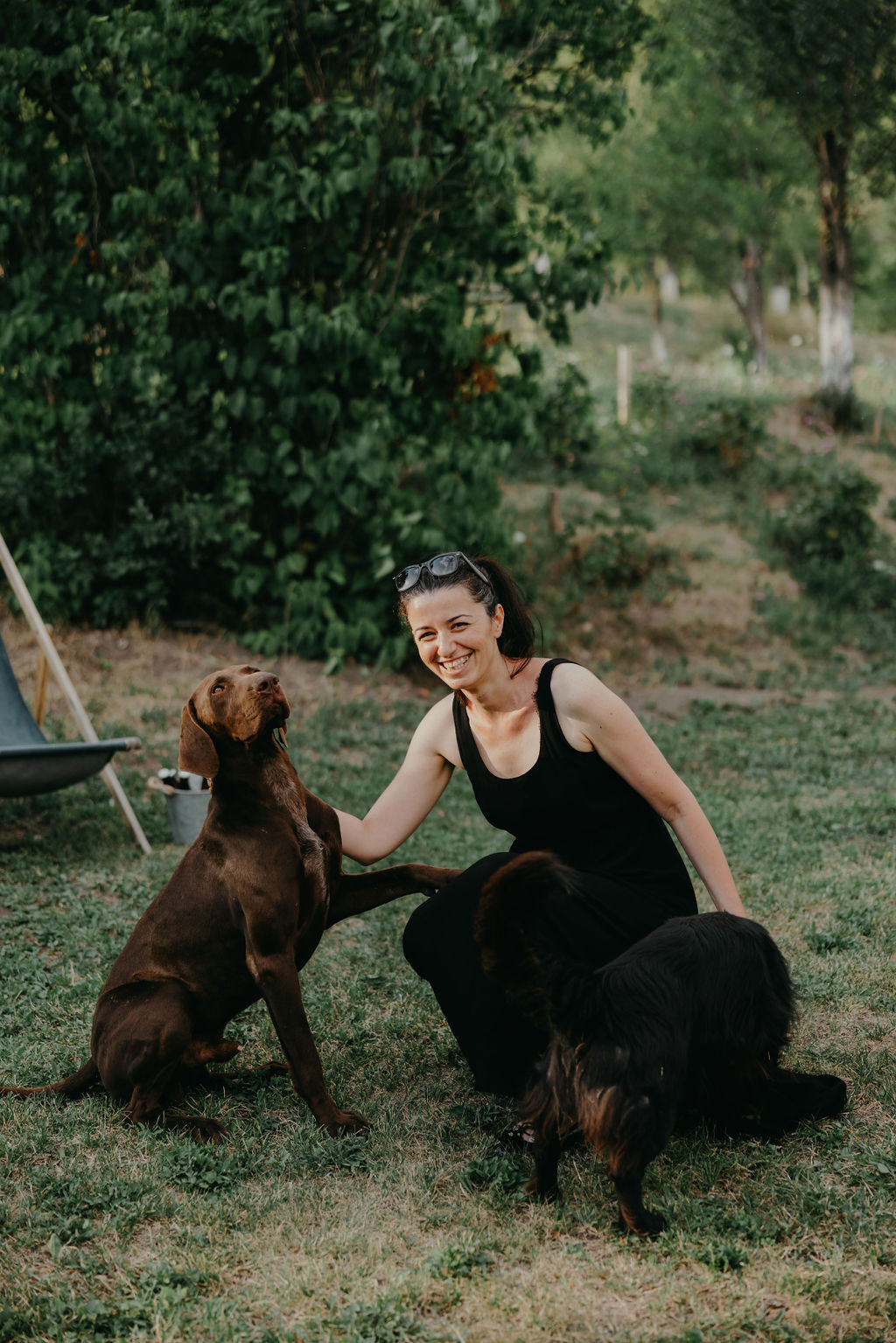
shooting de vara: am luat un loc frumos, cu aer la umbra soarelui si oameni buni, si se creeaza… momente
locatia: Ceainaria Infinitea
sursa: foto: Andreea Rau-Neacsu
@@@@@@@@@@@@@@@@@@@@@@@@@@@@@@@@@@@@@@@@@@@@@@@@@@@@@@@@@@@@@@@@@@@@@@
A DANISH MAN IN ROMANIA
It sounds like the title of a novel or a song. It is neither or these. It is just the story of Robin Wildt Hansen, a great admirer of our country and language, which he speaks very well. And it is something else. It is a short story about how Romania has changed the life of a man with all of his prejudices, fears and habits.
What determined you to learn the Romanian language?
I was doing linguistics and I signed up for an additional Romanian language course at the University in Lund, in Sweden. I never thought that I would do it so… fully. It was a fantastic course, held by an extremely charismatic teacher, Coralia Ditvall, who truly put her heart and soul into promoting Romania and the Romanian language in Northern countries.
After a few months months in this course, a colleague told me that Mrs. Ditvall received a scholarship at a summer school in Timisoara. Unfortunately, she wasn’t able to go and recommended that I should go. I never thought that I would be able to come to Romania. I didn’t know anything about this country, but I took the unexpected offer as a sign of fate. It wasn’t just that. It became a great adventure.
How did your first contact with our country go?
I can say that my first trip perfectly illustrates the way foreigners typically imagine Romania to be.
It was in 1999. I landed on the Budapest airport and the took a train to Timisoara, with transfer in Arad.
At the border, an officer came in to check our passports. When he saw that mine is Danish, he looked at me surprised and then looked the way the train was headed. „Romania?!” he said doubtfully. I nodded my head yes, he raised his shoulders as if I was crazy and he can’t help me. After he left, I started to worry. „What was this strange country I was about to enter?!” I had only heard once something about Romania, from a Romanian man in Copenhagen. He somehow suggested that it is a crazy and dangerous place. And then, how was I going to cope, only knowing how to say „Yes”, „No” and „Thank you”.
After I calmed down, a pair of Romanians wearing something similar to military uniforms came in. They looked at me and smiled. That’s it.
„Do you want to see my passport?” I asked, as I was taking it out. They nodded their heads no.
„Would you like to exchange money?” one of them asked.
More and more such border officers came in the compartment, until it was full. Some stayed outside, on the hallway. One of them told me that I might miss the connection for Timisoara and that I would need to wait in Arad until the next morning.
„Is it dangerous? I asked.
„No” he replied. „But it’s better to take a cab from a company we know.”
To keep the story short, I almost spent all my money on the taxi. And it wasn’t little. But they charmingly took them and I didn’t feel threatened for a second. In a way, it was my mistake: I was the victim of my own prejudices on Romania.
Have these prejudices gone away?
Very fast.
When I arrived at the University of Timișoara. I was amazed by the hospitality and kindness of the people there. In the end, I began to realize how high the cultural and educational level of these people is. It is something I admire in Romanian people. During my many trips to Romania, I realized that there are broad segments of the population that have a, let’s say, classical education, which is extremely rare in my native country, Danemark. There, people specialize in a domain, but know very little about anything else. This tendency starts to manifest in Romania as well, now, but there are still many people who have a general knowledge and still read books!
It is this traditional education system that helped me to quickly learn how to speak and write in Romanian.
The beginners course in Timisoara was held by a very severe, but also charming teacher, Domnita Alexandru. She asked a lot from us. I remember doing my homework in bars, drinking beer with many of my colleagues. They were English and were very surprised seeing how studious I was; they had a different teacher and didn’t understand how scared I was by Mrs. Alexandru! But I never wished for something different. I learned very much in those two weeks and I adored the refined, even elitist style of teaching, with high hopes and demands. After finishing the course, the people at the University took us on a trip to see the surrounding areas. We visited Brasov, Hunedoara, Sibiu, the Bran castle, Sighisoara and other places with names I can’t remember. There was always something new, there was always something happening that surprised us. And the people’s hospitality was fantastic. I never seen anything like it before!
Every contact with a new culture enriches you. What does Romania and Romanian people offer you?
The hospitality of Romanian people lead me to one of my existential crises. I was in Cluj, one year after the summer school. I lived in the apartment of the friends of a friend. Their amiability, care towards me have shaped my life. They took me with them everywhere, they always asked me what I want, it was enough to give a small hint and they acted accordingly.
I come from a country where people are only concerned with their own things, where we are taught not to say what we want or get involved in anybody else’s life, even if we only want to help. Therefore, the way those people treated me was a big shock for me. It was very hard for me to get used to it. I was trying not to show them what I want, because the thought of them changing their plans because of me was uncomfortable. At the same time, I didn’t do anything for them, because I wasn’t used to it and I simply didn’t know how to act.
I remember telling them at some point: „You don’t need to be so fussy about me.” And they replied: „But if we came to Danemark, you would do the same for us.” They read the denial in my eyes and asked doubtfully: „You would, wouldn’t you?” That moment I felt like dying because I realized that I am about to become a better man.
I don’t know how much I managed to achieve this, but a few months late, the amiability of these people, the influence they had on me, determined me to receive some Romanians coming to visit Copenhagen at my place. The next year I did it again, with other people. When they had to go to the authorities with the residence papers I told them I want to go with them.If I hadn’t had the experience in Romania, I would have never done that. It was great luck that I went with them, otherwise they risked being kicked out of the country.
What came next after this first trip?
Another longer one. I was truly charmed with what I saw in Maramures: people wearing folk clothing on a normal day. The Merry Cemetery, the
Village Museum in Sighetul Marmatiei, the Museum of the victims of communism. Everywhere I went I hitchhiked. People would stop right away and were happy to chat on the road. The next year I came to Bucharest, with an Erasmus scholarship. I only planned to stay for three months and I stayed nine. When I was close to leaving, I felt sorry about doing it. When I came back to Copenhagen, I had a cultural shock opposite to the one I had experienced when I first came to Romania. This made me write my first novel, which is about the Danish culture. It was published there, a few years later.
In a nutshell, knowing Romania influenced my life and my current view on the world. I stayed in touch with Romania all the years that went by and I keep perfecting and speaking the language. I often listen to Radio Romania Cultural, on my mobile phone, wherever I am in the world.
Does Romania have a place in your future?
Since 1999 I have tried to come back here. I constantly feel a challenge, I feel like I am living and my Romanian language skills are getting better and better. To me it is clear that Romania has a special place in my life.
location: Infinitea Tea House
photos source: Andreea Rau-Neacsu